
Doctoring, Loss, Love—and Liberation
“I think I might be living in heaven. How can there be war when there is so much love?” – Tish Bell

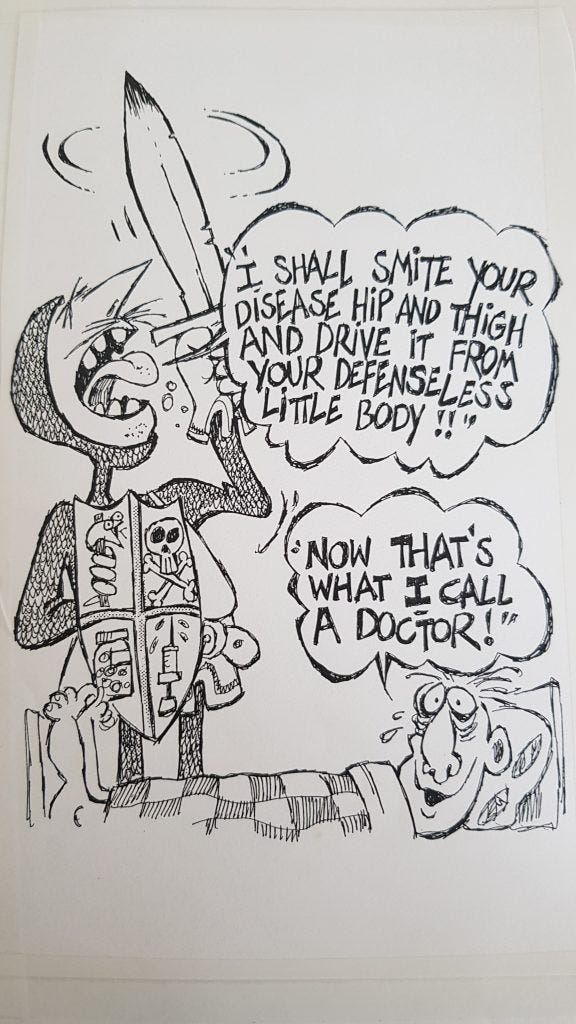
Before I was a doctor, I experienced the power of my conditioning to spoil my life. Through my personal and working life I have seen how trapped we humans can be, by our hidden knowings and understandings.
Now I’m writing to explore the stories, beliefs, experiences and knowings that shaped my life—and may have shaped yours, too.
Early Days as a Doctor
I’m a retired medical practitioner and getting on a bit now. After five years as a junior doctor working in UK hospitals, I came to New Zealand in 1975, aged 29. Following a year as a medical registrar in Critical Care and a few family doctor locum jobs around the country, Tish and I arrived on Waiheke Island. Back then, Waiheke was not the place to be, like it is now.
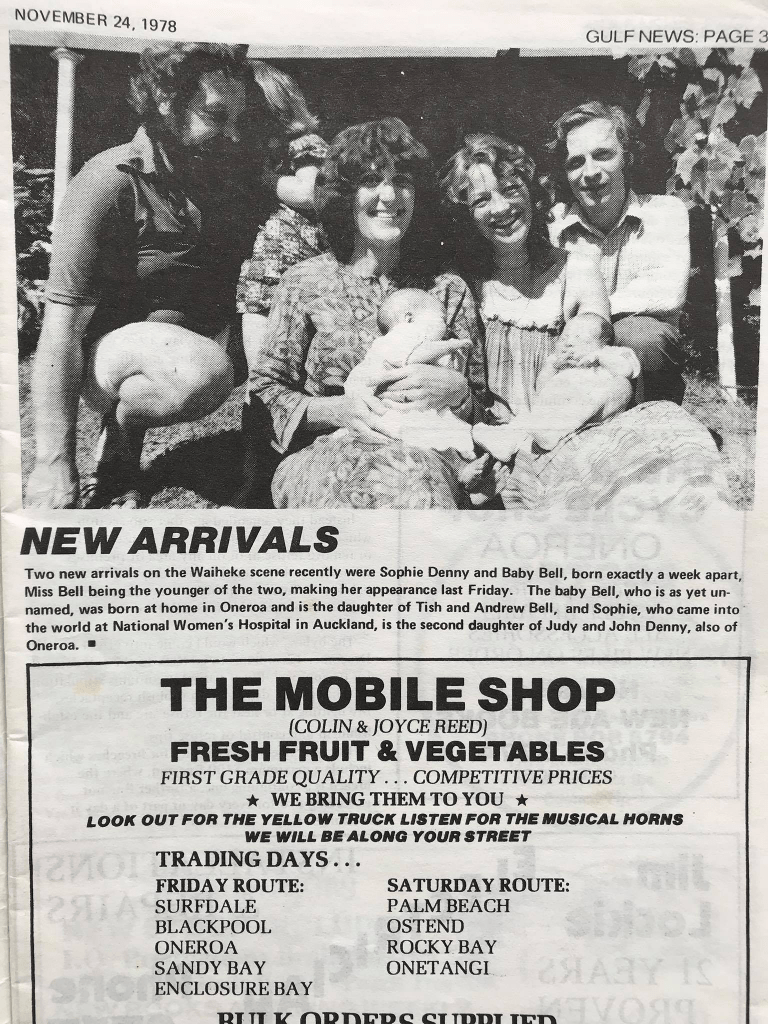
It was a patient—a heroin addict in a worn-down Auckland practice—who first suggested Waiheke. ‘You’ll fit in with that lot, doc,’ he said. A couple of weeks later, Tish and I visited. Not too long after, we bought a wee house for $47,000. We rented another house in Oneroa to use as our surgery or medical clinic. An advertisement was placed in the Gulf News, the local rag. We opened the doors and waited for customers.
In those days, doctors in New Zealand could set up shop without any hassles—no need for permission from anyone, no overseeing centralised accrediting body to play nice with.
Discovering Waiheke
The decision to go to Waiheke was a spur-of-the-moment punt—no research. It’s beautiful, let’s do it. It took a month or so of serving coffees and chatting to people checking us out before we knew it would work out. A year down the road, owning a house and a business, Tish and I woke up. We’d slipped into living and working together without thinking or talking about commitment, marriage, or anything like that. We had simply gone with the flow. We’d been buddies for ten years or more.
The locals were calling Tish, Mrs Bell, so we thought, why not, we might as well get married. We sailed over to Great Barrier Island in my little 25-foot keeler, having arranged for a man of God to be flown over for the day to marry us on Tryphena Beach, witnessed by six friends and a few locals. What an awesome, mind-blowing day it turned out to be. I knew, then, I adored her.
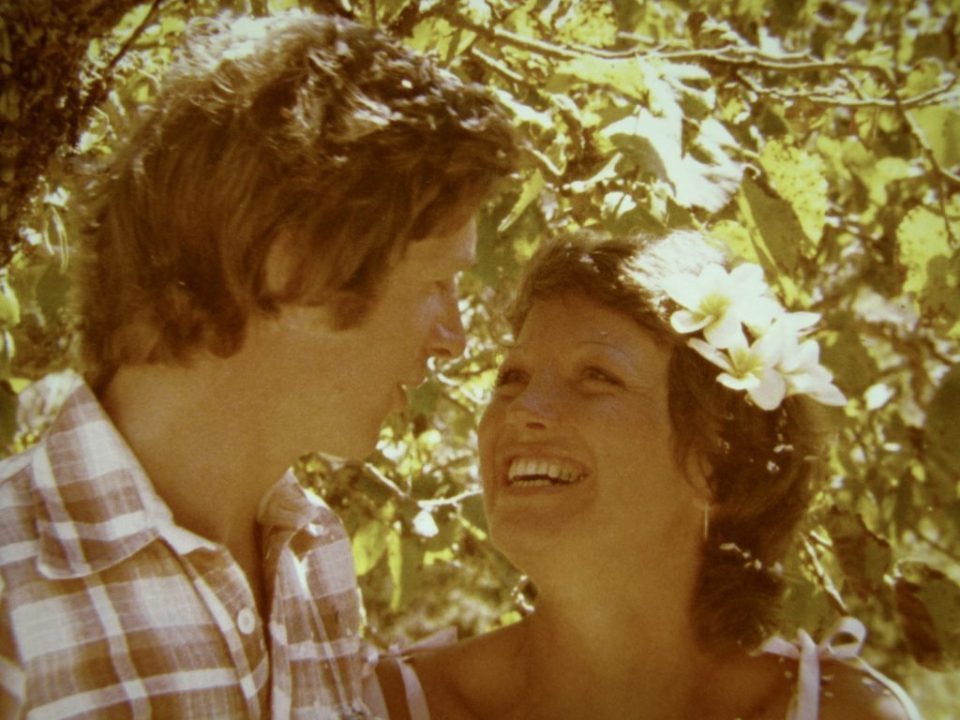
A wee while later Zoe Bell arrived and five years after her Jake Bell.
A Shift in Worldview
Waiheke Island is where Tish and I began, in so many ways, to fumble our way into growing up. It was where my orthodox views, medical and otherwise, came under intense scrutiny. I learnt to cry, express anger usefully, listen, empathise, and develop some emotional intelligence. At 79, the learning continues.
On the island, there were promoters of acupuncture, reflexology, various forms of massage and joint manipulation, Reiki, homeopathy, cranial osteopathy, Bach flower remedies, counselling, naturopathy, and dietary regimes—people claiming cures from massive doses of chilli powder to sniffing urine and rebirthing. I experienced psychodrama, chair work, and other psychotherapies like the Option Process. I bashed a few pillows—murdered my dad!
I used acupuncture with amazing success for a short while—the same with manipulation—and then without much success. This early success, then fading, seemed to be a pattern with most alternative things I tried. Like a study I once read suggesting that novice psychotherapists were more effective than their teachers—young, curious, wide-eyed, innocent.
I was processed by a couple of ‘wise’ older men. Many strange things happened under their influence—some of which will be in the stories shared here. Truly weird, non-drug-induced experiences.
The Waiheke air and many of its folk flipped my worldview. I ended up thinking it’s not so much what we think and feel consciously, but what we believe on an unconscious level that runs our behaviours and our lives—and maybe even our state of health. I still think this, though with less fervour.
Leaving Medicine—and Returning
Our nine years on Waiheke were intense, learning-filled, and fun. Many of us were naively challenging what we’d taken on as true. But it wasn’t all a bed of roses. Tish and I very nearly lost each other, due in large part to my inability to respond well to our struggles. I look back now with immense fondness and some nostalgia. Yes, things could have been more elegant. There could have been less hurt. But we were ill-equipped to step outside what we knew.
Tish and I moved into a psychotherapeutic community for a year. I wrote a book published as Creative Health, originally titled Fighting to Die: The Cost of Living is Too High. I set myself up as a metaphysician—wow—a counsellor, ran groups, started The Creative Health Institute, and worked one-on-one with clients. It was enjoyable, growing, liberating—but not financially viable.
A fence fell down during a storm. Our car was musty, rusty, and had grass growing in its floor mats. No money to fix the fence or replace the car.
After nine years out of medicine, I returned—working in drop-in clinics and for a home visiting service. Eventually, Tish and I travelled New Zealand in a fifth wheel, working as a locum medic, often on Great Barrier Island. Tish ran training groups for a sales and marketing company.
Loss and the Question That Remains
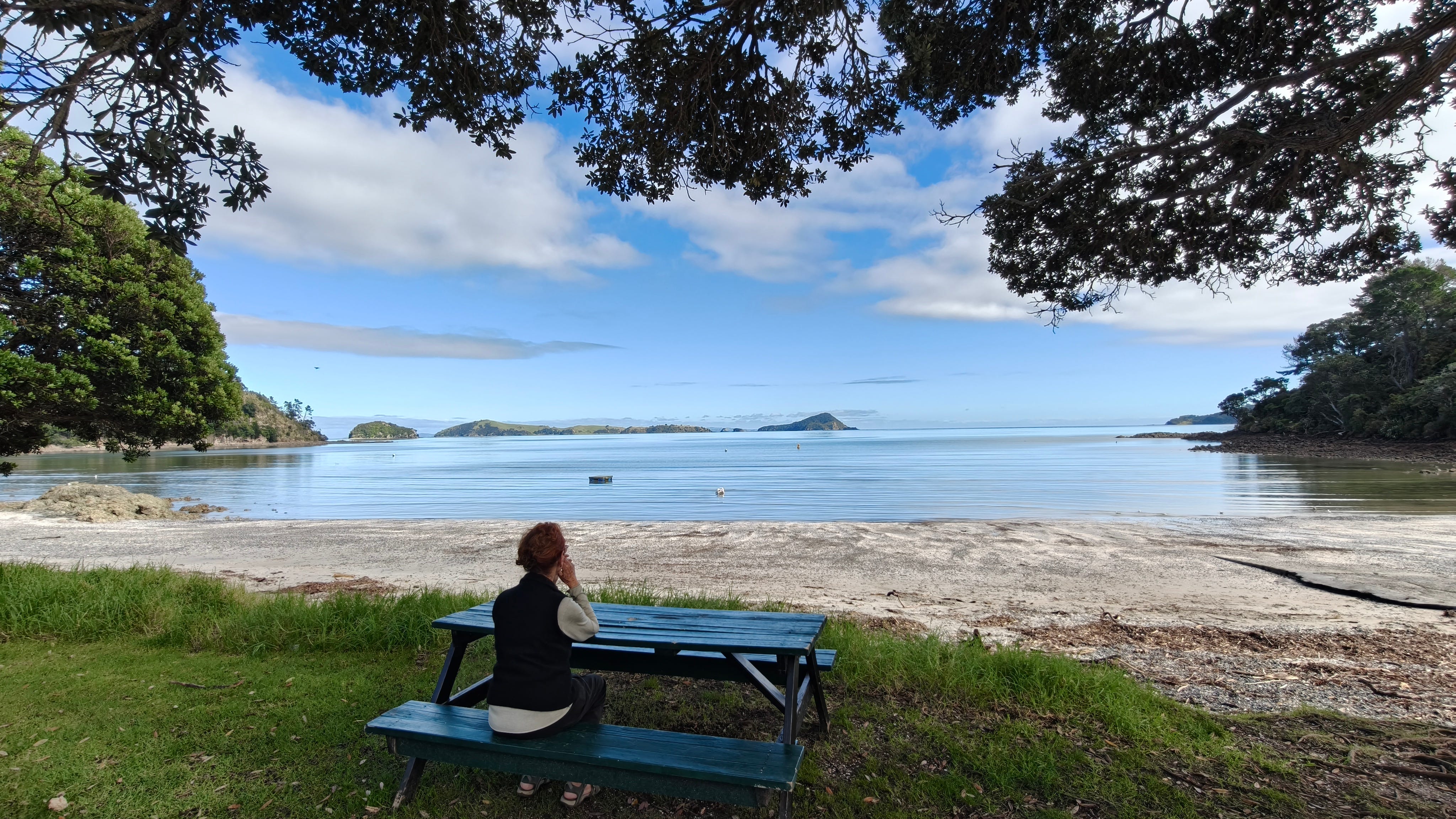
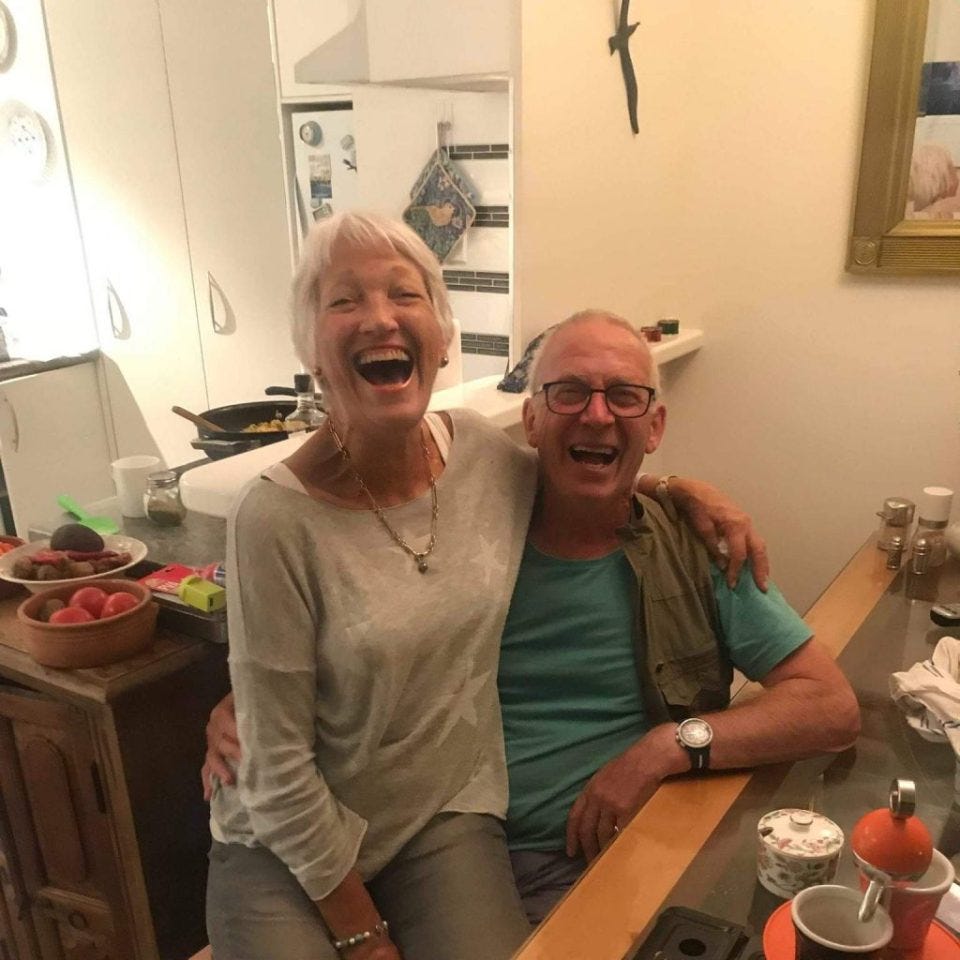
Nine years ago, in 2014, we retired to the beautiful Coromandel Peninsular and ran a B&B named The Green House. The photo above is from my regular walk. From photos of Tish and I at the time, see below, you can see we were enjoying life.
In 2018, while visiting the UK and Europe, we had to cut our trip short. Our ‘son-in-law’ had suffered a severe head injury. Our daughter Zoe, working as the stunt coordinator on Once Upon a Time in Hollywood, needed help. Her boyfriend was going to require supervision for months.
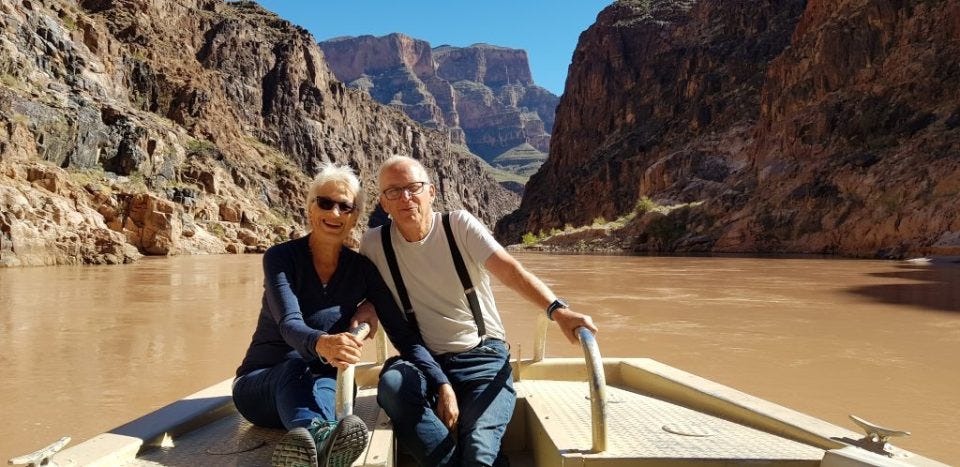
During a break we visited the Grand Canyon—Tish was fitter than I, full of beans. Six weeks later, she was dead.
She died of an hepatic angio-sarcoma. These cancer cells double every two to three hours, we were told - a terrifying exponential growth. We were told she might die any moment from an internal bleed—five days at the most. Another specialist said we might make it back to New Zealand. The first opinion was right.
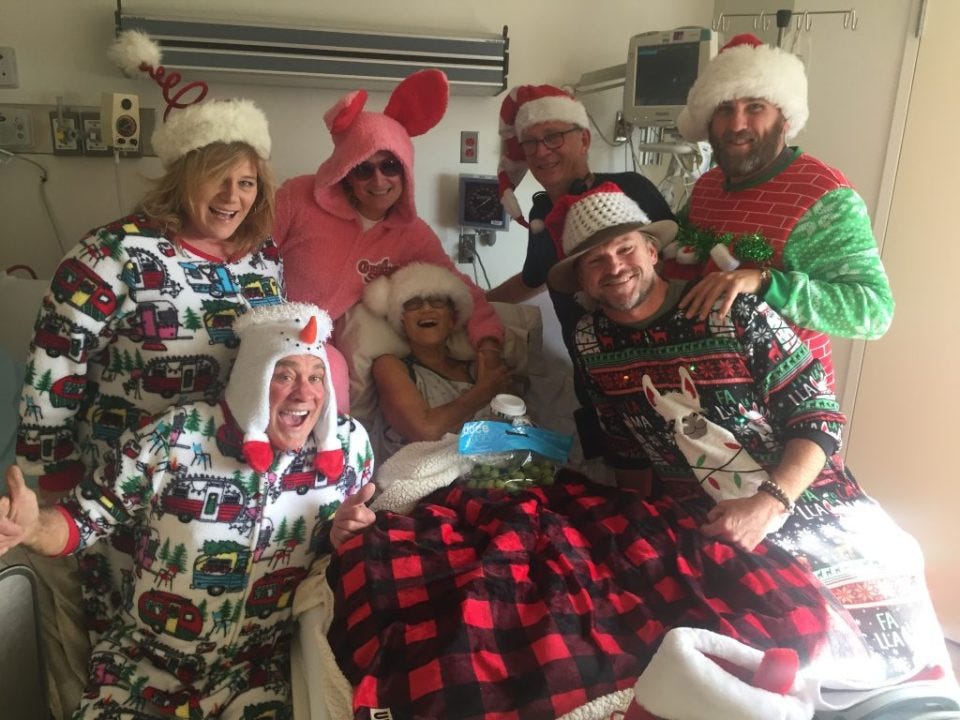
From hospital admission to her death: 30 days. Thirty days of “It’s benign,” “It’s cancer,” “Maybe it’s not,” “Maybe it is.” It was. The image below with Tish in the centre was taken the day before she died.
Tish was a vegetarian, walker, meditator, and a yoga enthusiast. A welcoming, bright soul with plans for the future. Her art supplies were laid out, her cupboards full of creative intention.
The morning she died, she took my hand and said, “I am dying, Andrew.”
“Are you scared?”
“No. I’m just so sad I won’t see my grandchildren.”
Jake arrived from Melbourne. He lay with her, snuggled up. Zoe and I left over hearing them chat with each other. When we returned, Tish had slipped into a coma. A few hours later, she took her last breath, a deep one, and was gone, held by us all.
Throughout her hospital stay, I ran a Facebook group—Tish Updates. Friends sent poems, photos, music, love. In her final hours, we played her favourite music, read messages aloud, and video-called family from the UK, her brother, sister and my brother all were enabled to say good bye. She was not alone.
She didn’t get to see our gorgeous grand child, Kaya Lilly lee.
A friend of my son Jake, Kajsa Magnusson, wrote to Tish as she was dying:
Tish, I’ve traveled around the world, met a lot of different people and your son is one of them. It’s very rare to meet someone like you. You make people come together, you make people laugh, you make people believe, you are strong and a true inspiration to everyone. I love you.
With endotracheal tube in place post-laparotomy, Tish wrote the following:
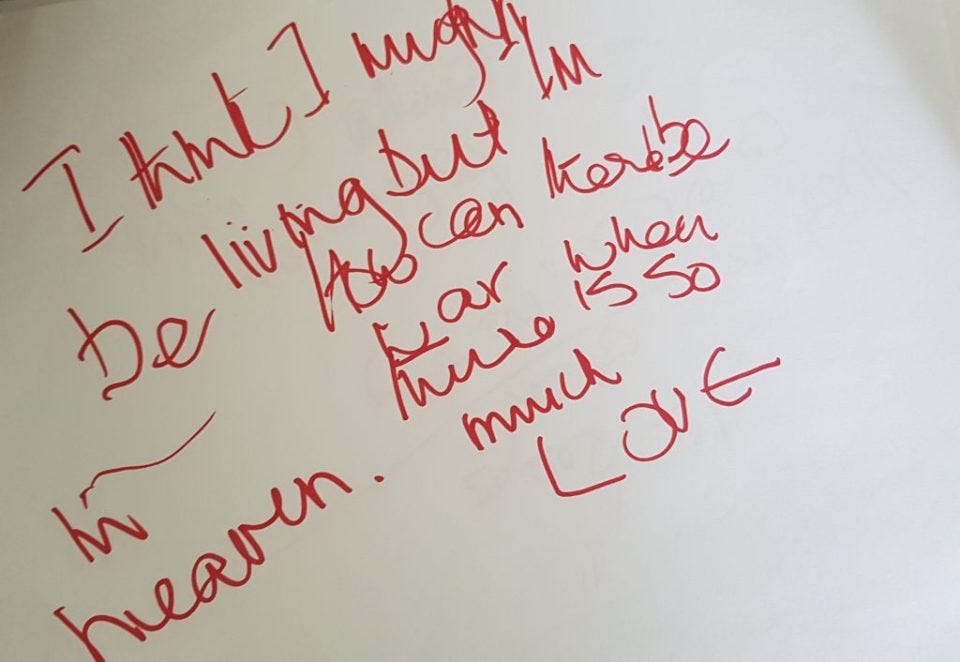
“I think I might be living in heaven. How can there be war when there is so much love.”
I’ve stopped asking why. Was it the radiotherapy from 12 years ago? An emotional wound? A rogue plutonium atom? Her “healthy” diet? I can’t know. Some days I still cry. Tish was a good woman. We experienced a lot together. We came through some tough times. Underlying it all, we were good mates from our late teens on. Tish died over six years ago. She still comes up on my screensaver. I enjoy the memories.
Where This Substack Might Go
I’m now learning how to be with a woman again—in ways that are allowing and expanding. Her name is Gayle. She is a delight. Her late husband Gary passed a few years ago. It’s good to be challenged again - be in life again. Hopefully she and I will have 10 years or more of allowing and letting go.
I hope this gives you a sense of who I am and what this Substack might become. It will include patient and personal stories, commentaries, some philosophising. I might serialise Fighting to Die: The Cost of Living is Too High.
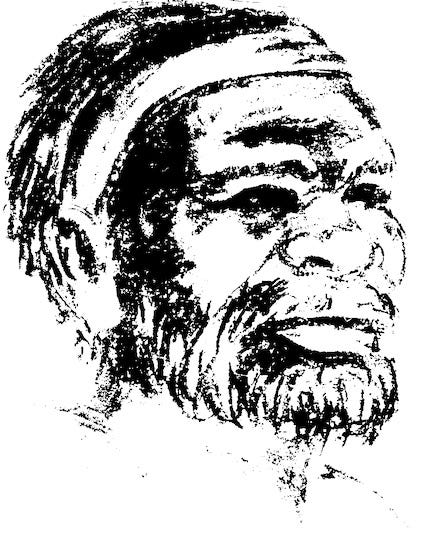
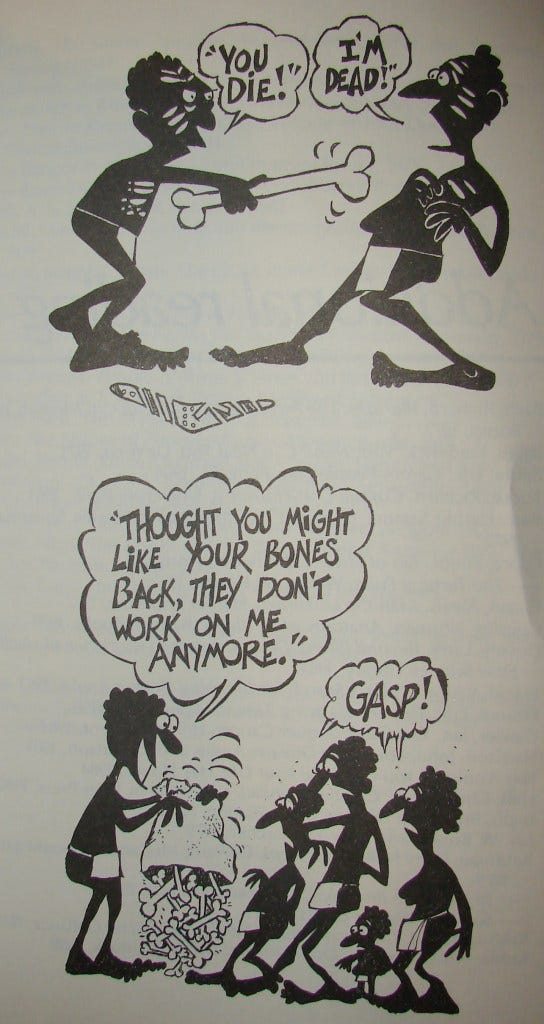
It was inspired by an imaginary Aborigine named Waka—and the deadly story of bone pointing.
What’s Your Bone?
Our narratives, conscious and not, shape our lives. What we “know” can heal—or harm. Waka’s knowing about the bone is absolute, and potentially fatal.
To what extent are our troubles caused by what we know, by bones pointed by ourselves, others, or our culture? This question has stayed with me, since my late teens. It will be a thread running through this Substack, well unless things take a unexpected trail.
What I’ve learned and know is: we can’t think our way out of everything. Nor can we feel our way out. Liberation requires both—and something more. Thinking and feeling can take us to the edge of what we know, if we are willing. But going beyond that…….?
What will it take for Waka to KNOW the bone is just a bone? To KNOW, with every fibre of his being, that the bone is just a bone? When he KNOWS this, it will all seem so simple. And it is—and it isn’t. There’s a jump, a paradigm shift, a letting go of the known, an entering into the unknown. Maybe an asking for help.
What does it take to change a belief, a habit, an unproductive reaction, a self harming certainty?
Guess what? When it’s our turn, we’ll more than likely resist the unknown—clinging, in subtle ways, to the comfort of what we know. Preferring in an incredulous way to suffer rather than be free.
Hence the title of my book: Fighting to Die: The Cost of Living is Too High.
I hope these stories, reflections, and questions resonate with you. May they stir your own knowing—and perhaps loosen the hold of some bone or bones pointed long ago or recently.
Hi and thanks. Life is great for Gayle and I at the moment in sunny Northern Rivers. We are hoping for another 10 years of adventure and memory making. All the best for you too.
Your story of life with Tish was beautiful.
May the universe gift you and Gayle 10 years plus 10 more for adventure and memory making.